The Founder's Letter
The architecture of the unwritten.
I didn't grow up as a writer. It was my spouse who pushed me to try. So I did — six weeks, on and off, and at the end I had a manuscript I was so proud of I could have run to the moon barefooted. Eighty-four thousand words.
Then someone close to me read it and told me it was terrible. Literally. That is what I was told on my first novel ever.
“Terrible” is a weapon. That's the moment most people stop. I know what that feels like. I lived in it for a while.
Years later I understood: I had been judging my first try against books that had gone through years of editors and revisions before any reader ever saw them — an impossible standard I didn't even know existed. Most people who get told their first story is terrible never write again. This house exists so they do.
Why I built the rooms
I went back — forty years in sports made sure of that — and I learned the craft in stolen hours: late nights when the kids were asleep, lunch breaks, the in-between moments a single parent has to fight for. Nobody taught me what I was doing wrong. There was no money for editors who would change my work into something I no longer recognized. So I built the thing I needed and couldn't find: a place that teaches instead of replaces. That shows you the standard instead of punishing you with it. That protects your voice like it's the whole point — because it is.
Why I built a room for the ones who served
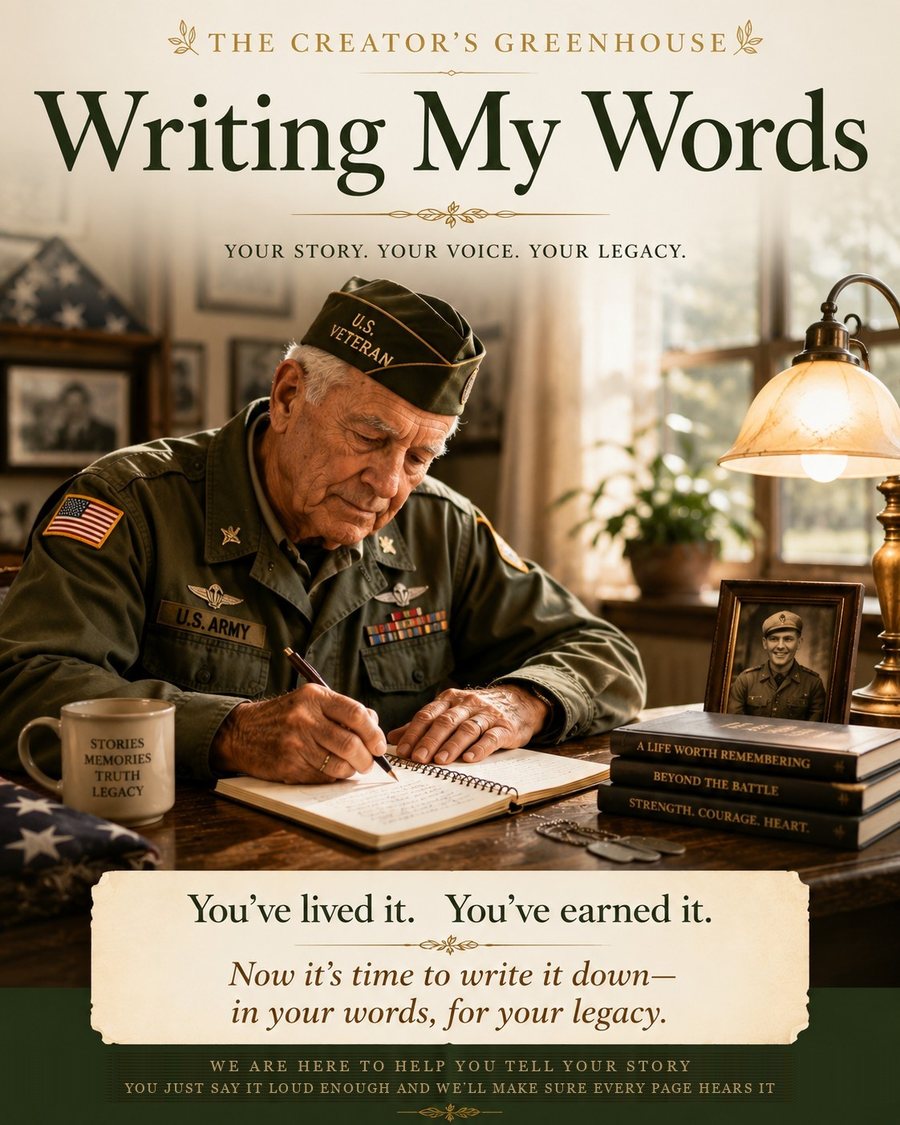
Then I thought about the people who carry the heaviest stories of all. Veterans have gone through things most of us will never understand — and every one of them has a story to tell. Most were never shown how, and every way of telling it meant handing it to someone first: an interviewer, a group, a stranger with a recorder.
So I built them an outlet to tell it exactly the way they want to tell it. A safe place, with no judgment, where the story is never edited into something it isn't and never changed into someone else's words. They talk — there's a button for that; no typing, no learning “AI.” Rye listens the way a good friend listens, writes it down in their words, and reads it back until every line says what they meant. Tell Rye your rank, and you will be addressed with the respect you earned. Nothing is finished until they say it's finished, and the story belongs to them alone — unless the day comes when they choose to share it.
They've lived it. They've earned it. Now there's a place to tell it.
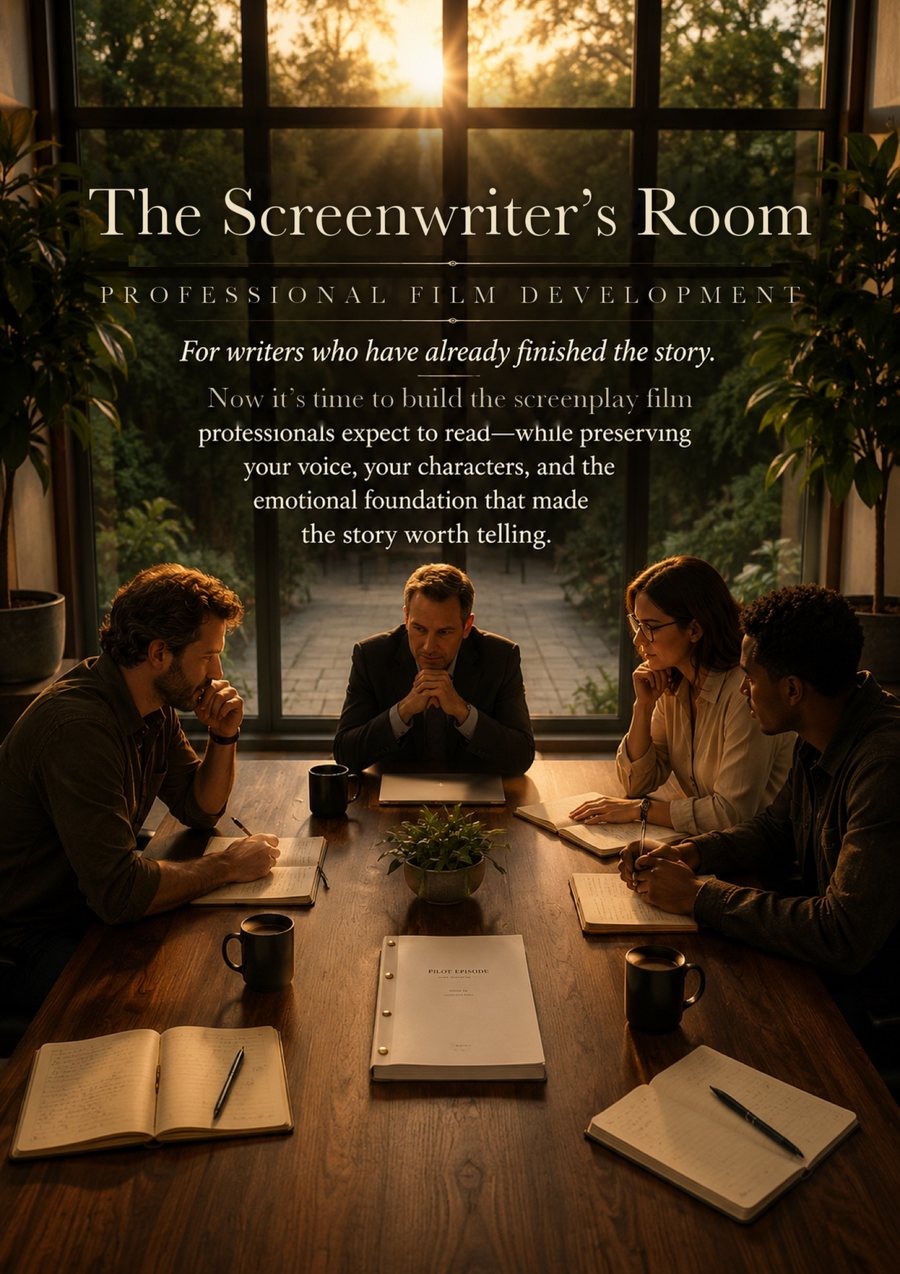
Every manuscript of mine goes through these rooms — including the novel that started this story. I would not offer you a house I don't live in.
— Lei A. Benoit, Founder & System Owner

 I
I